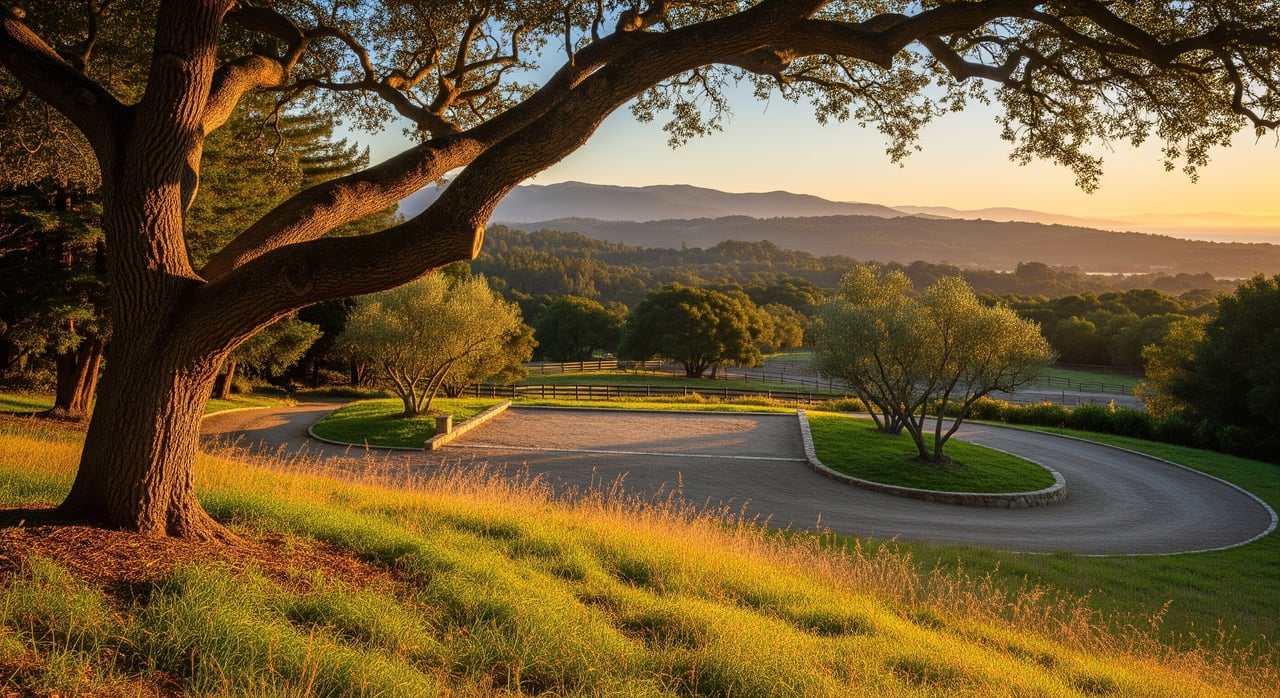
Key Woodside Land Value Factors for Parcels and Estates
December 4, 2025
December 4, 2025
Is the land or the house doing most of the heavy lifting on value in Woodside? If you own or want to buy acreage here, you likely care most about privacy, trees, views, and a smooth path to permits. You also want to know how appraisers separate land value from the structure in a market with few vacant sales. This guide explains the factors that move the needle on land and lot value in Woodside and how to approach due diligence with confidence. Let’s dive in.
Woodside is a low-density estate market with large parcels, strong privacy, and intense buyer demand. Vacant, developable parcels are scarce, so buyers and appraisers focus on how usable the land is, what it will cost to build, and which constraints apply.
Gross acreage is the total recorded area. Usable acreage is the area you can realistically build on after accounting for steep slopes, setbacks, heritage tree protection zones, easements, and septic or well locations. In practice, usable acreage drives value more than total acres. A five-acre parcel with only 1.5 buildable acres often aligns in price with parcels that have 1 to 2 usable acres, not with flat five-acre lots.
Tip: Ask for topographic maps, a site survey, and a conceptual building-envelope sketch so you can translate gross acres into net buildable acres.
Slope and subsurface conditions change construction cost and feasibility. Steeper terrain often means more excavation, retaining walls, and stormwater control. In the Santa Cruz Mountains foothills, geotechnical studies are standard, and significant mitigation needs usually reduce what buyers will pay. For broader context on slope stability, review the USGS landslide hazard resources provided for this region, such as the program overview from the USGS Landslide Hazards Program.
Mature oaks and redwoods are part of Woodside’s appeal. They can also narrow your building envelope due to local ordinances and permit requirements. Many projects need arborist reports, and removal of protected trees can require mitigation or be denied. Start with the Town’s planning materials to understand current regulations and the permit path via the Town of Woodside.
Buyers pay premiums for privacy and unobstructed view corridors. A smaller parcel with strong natural screening and a well-placed building site can outperform a larger, exposed lot. Orientation, ridgeline exposure, and how trees frame the view all factor into market perception.
Even in an estate market, distance and drive time to services and job centers matter. Year-round access on maintained roads typically trades better than remote or complex access arrangements. Private road associations and maintenance agreements add recurring costs that buyers consider when pricing.
Many Woodside parcels rely on well and septic. Feasibility and capacity are critical, since a non-viable septic or unreliable water source can limit development density. Utility easements or overhead lines can reduce usable area or create visual impacts. Confirm availability and feasibility early to avoid costly surprises.
Recorded easements affect how you can use the land and where you can build. Conservation easements, in particular, can remove development potential and shift value away from the private parcel. You can locate deeds, recorded easements, and past conveyances through the San Mateo County Assessor-County Clerk-Recorder. For nearby conserved lands and potential easement context, review the Midpeninsula Regional Open Space District.
Because vacant land sales in Woodside are limited, appraisers often rely on methods that extract land value from improved sales. These approaches are well established in appraisal practice. For foundational methodology, see guidance from the Appraisal Institute.
When recent vacant land sales exist, the appraiser adjusts for acreage, topography, utilities, access, and views to derive a per-acre or per-buildable-acre rate. In Woodside, that often means prioritizing adjustments by usable acreage rather than total acres.
If vacant land comps are thin, the appraiser estimates the replacement cost of the improvements on a comparable sale and subtracts that from the total sale price to isolate the land value. Credible estimates of depreciation and site improvements are essential in this method.
If the highest and best use is redevelopment, the appraiser may estimate the value of the anticipated finished improvements, subtract development costs and profit, and allocate the remainder to land. This is most relevant when an older home sits on a parcel that is primarily valued for the land.
A good process reduces risk and strengthens your negotiating position. Focus on records, site studies, and the right professionals.
These documents turn unknowns into quantifiable costs, which supports a clear land value and helps you avoid re-trading during escrow.
Value in Woodside often comes down to usable acreage, buildability, and amenity premiums or penalties. Use that framework to support your price.
Insist on feasibility contingencies. Include septic or well feasibility, tree and permit reviews, and geotechnical due diligence.
Translate constraints into dollars. Price mitigation for retaining walls, drainage, tree preservation, or long access drives, then reflect those costs in your offer or request credits.
Align use with value. If your highest and best use is a new build, consider residual techniques as you model the land’s value after construction.
If you want a clear, data-backed read on land value, start with the right records and technical reports, then anchor your pricing on usable acreage. From there, apply premiums for privacy and views, and discounts for slope, trees, access, and utilities. If you would like discreet guidance and access to private-market context, connect with Michael Warren for a confidential consultation.
Stay up to date on the latest real estate trends.
Whether it a first-time home buyer or a 10+ Million listing, Michael brings an innovative approach and earns the respect of his clients by working tirelessly on their behalf and always offering candid advice. Contact him today to discuss all your real estate needs!
Connect with Michael.
[email protected]
(650) 315-0224
License #01968537
2930 Woodside Road, Woodside, CA 94062