
Why Atherton's New Construction Rules Keep Buyers Off a Nearly Finished House on Weekends
November 12, 2026
November 12, 2026
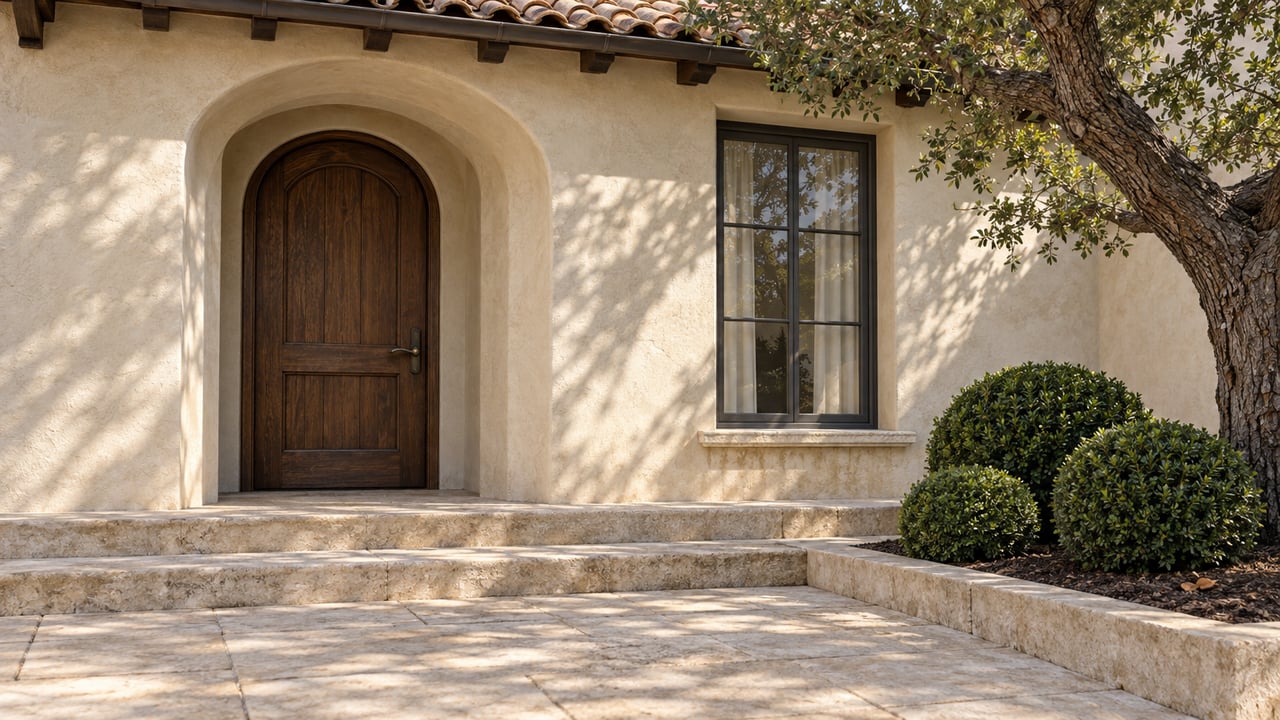
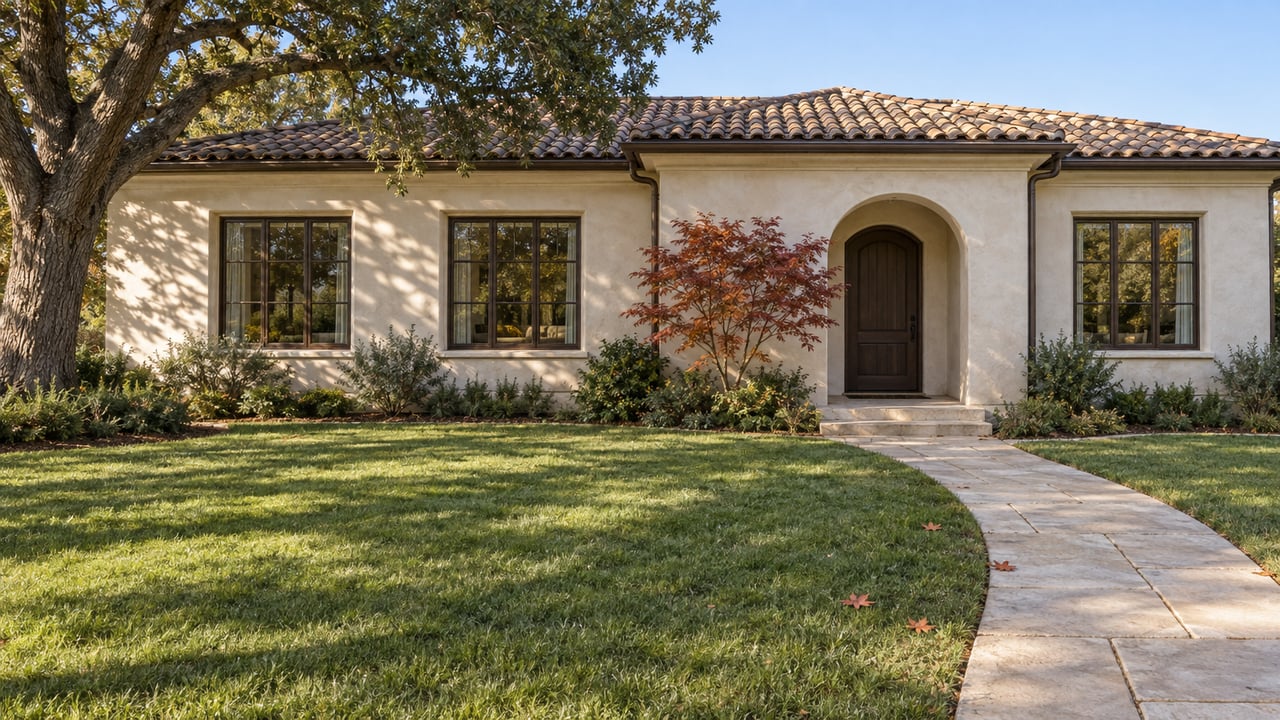
The house is done in every way a buyer would notice. The stone is set, the drapery is hung and the gravel drive is raked. Under the Atherton rules that take effect November 20, nobody may walk through it on a Saturday without an Exemption Permit approved in advance. That includes the listing agent, the buyer's agent, the stager and the cleaning crew. The restriction ends when the Building Official issues a temporary or final certificate of occupancy. A finished look does not end it.
On October 21, 2026, the Atherton Town Council adopted three ordinances: a new Construction Management and Operations Plan requirement, a rewritten set of construction regulations, and a "Do Not Solicit" list. Each takes effect 30 days after adoption, on November 20. Most coverage has focused on parking and neighbors. For anyone selling or buying new construction, the bigger change is that the selling calendar now runs on the occupancy permit.
Under the standard CMOP Agreement the Council approved, every covered project has to print a set of notes on its plan sheet. Three of them, copied verbatim from Section 17, set the selling calendar:
Construction, inspections, deliveries/pick-ups, and servicing of any item on-site shall be permitted only Monday through Friday, from 8:00 a.m. to 5:00 p.m.
No work or site access of any nature, including but not limited to hauling or heavy equipment activity, shall be permitted on Saturdays, Sundays, or holidays.
This restriction includes, but is not limited to, site visits by realtors and cleaning crews, until the TCO/COO is approved and issued by the Building Official.
The Agreement itself has lines for the owner's initials and the contractor's initials beside each section. On a spec home, the seller signing those lines is often the developer who will later list the house. The access limits are part of the permit conditions they agreed to, not a matter of courtesy. Once approved, the CMOP becomes part of the construction documents and the building permit conditions.
The plan-sheet notes govern covered projects. The rewritten Chapter 15.40 reaches further, because its definition of "Activity" covers the routine steps of preparing a house for sale. It explicitly includes:
The definition also says an activity "need not generate noise, involve physical construction, or require the operation of tools or equipment" to count. Unless the Code or the Town expressly authorizes it, no construction-related activity or site access may happen outside permitted hours.
Permitted hours are weekdays, 8 a.m. to 5 p.m. Construction, pickups and deliveries are barred on Saturdays, Sundays and listed Town holidays. Any other out-of-hours access needs an Exemption Permit approved in advance, and the Town may limit its dates, hours, activities and conditions. For planned work under an Exemption Permit, the contractor must notify every property within 300 feet of the construction site's property line in advance and post the approved permit at the entrance.
A familiar new-construction sequence collides with these rules. Twilight exterior photography, a Sunday broker preview, a buyer's own inspector coming back on a Saturday, a final clean the night before an open house: each is now either a weekday daytime task or a permit application. Short of an Exemption Permit or an emergency, the Agreement leaves one narrow opening. When the scope of work has revoked an occupancy permit, such as a demolition, a full-site development or a remodel affecting over 50 percent of the square footage, property owners and their guests may visit outside construction hours after notifying the Atherton Police Department at 650-688-6500.
How far this reaches depends on the Town's scope-of-work matrix, a public quick-reference sheet dated September 30, 2026.
| Scope of work | CMOP plan sheet | CMOP Agreement |
|---|---|---|
| Full site development, demolition, substantial remodel, addition | Yes | Yes |
| Detached or attached ADU or garage, accessory building | Yes | Yes |
| Grading and drainage, new pool or spa, sports court | Yes | Yes |
| Pool replaster, permitted fences and gates, decks over 6 inches above grade, landscape structures | Yes | No |
| Minor interior alteration, OTC roof work, solar, generator pad, WELO landscape | No | No |
The threshold that catches people is the definition of "Substantial Remodel." It is renovation affecting more than 20 percent of existing floor area or 1,000 square feet, whichever is less, within any 36-month period. On a 6,000-square-foot Atherton house, 20 percent is 1,200 square feet, so the 1,000-square-foot test applies first. A kitchen, family room and primary suite reworked together can reach that line on a house nobody would call a teardown. The Building Official can also require a CMOP or an Agreement for a project outside the matrix. Every project stays subject to Chapter 15.40 whether or not a plan is required.
The access rules decide when a house can be shown. A second set of rules decides what an unfinished house costs to carry. The same October 21 action moved Atherton's construction time limits into a new Chapter 15.41. The staff report states that the move "does not change the substantive Construction Time Limit requirements." The limits predate this year's changes, and they now run alongside the tighter site rules.
| Project size | Time limit |
|---|---|
| 2,000 square feet or less | 12 months from original building permit issuance |
| 2,001 to 4,000 square feet | 24 months from original building permit issuance |
| Greater than 4,001 square feet | 36 months from original building permit issuance |
Two details matter in a sale. The clock starts at original permit issuance, and "time limits will not be increased by issuance of subsequent building permits for the same project." Completion also means more than the house looking finished. It means final inspection and approval, full compliance with the conditions of approval, and removal of construction materials and debris from the site.
The penalties fall on "the property owner." For the first 30 days past the limit there is no charge. Days 31 through 60 cost $200 a day, up to $6,000. Days 61 through 120 cost $400 a day, up to $24,000. From day 121 the penalty is $1,000 a day with no cap, and penalties are due daily as they accrue. The owner must also post a $30,000 deposit when the limit is reached, and a $220,000 deposit on or before the 120th day if there is still no final inspection or certificate of occupancy. If either deposit is missing, the Building Official must issue a stop-work order.
Combined with the access rules, the effect is plain. A buyer who takes title to a project in month 30 of a 36-month permit has six months left on that clock. Under the new rules, the buyer's own walkthroughs, inspections and cleaning before occupancy have to fit into weekday business hours unless an Exemption Permit is approved in advance. There is an appeal, but only after construction is complete. It goes first to the Planning Commission and then to the City Council, and the owner has to show diligent work and delays beyond their control.
Chapter 15.40 sets infraction fines of up to $130 for a first violation, $700 for a second violation of the same ordinance within a year, and $1,300 for each further one in that year. The fines themselves are modest. The real exposure is the count. After three separate documented violations during an active permit, the Building Official may issue a formal Stop Work Order, and correction notices, abatement notices and administrative citations each count as one violation. That order stays in place until a mandatory compliance meeting is held, a compliance agreement and schedule are signed, physical violations are corrected and fines are paid. Violating a Stop Work Order is a misdemeanor.
During a listing, that means three weekend visits could turn into three documented violations and a stopped project, while the time-limit clock keeps running.
Parking follows the same rules. On-site parking must be fully used before any overflow into the public right-of-way. Overflow is allowed only in front of the site, on the same side of the street, as the approved plan permits. At the Council's request, the Agreement also bars vehicles from parking within 6 feet of a protected Heritage Tree in the right-of-way. It also sets back sanitary facilities and construction trailers 10 feet from side and rear property lines and 20 feet from the front, unless staff approve otherwise.
The Council directed staff to tighten construction management at a June 3 study session, focusing on parking, site maintenance, neighbor communication and enforcement. Staff then held a stakeholder roundtable on July 21. The Town's September 30 monthly report described it as a Builders Roundtable with about 50 builders and residents. Citizen Portal's account of the September 16 hearing reported that staff drew on comparable rules from Hillsborough and Belvedere. The staff reports for the CMOP ordinance and for Chapters 15.40 and 15.41 were prepared by Building Official Fred Lustenberger and Code Enforcement Officer Lisa-Marie Daley.
One related change is still pending. On October 21 the Council introduced amendments to its construction-and-demolition recycling rules. The amendments keep the 75 percent recycling requirement, replace the deposit process with Green Halo online tracking from January 1, 2027, and limit debris boxes to the Town's franchise hauler, GreenWaste. Adoption is scheduled for November 18. For a project that will finish in 2027, how the debris is tracked becomes part of reaching final inspection.
Does a weekend open house fit anywhere before occupancy? Under the plan-sheet notes, no site access of any kind is allowed on Saturdays, Sundays or holidays until the temporary or final certificate of occupancy issues, and realtor site visits are named specifically. Any access outside permitted hours requires an Exemption Permit approved in advance.
Can a homeowner still do their own weekend projects? Chapter 15.40 lets a resident or owner personally use hand or power tools on weekends and holidays from 10 a.m. to 5 p.m. The exception excludes contractors and hired workers, and it does not cover work within or related to an active Town permit.
Does the time limit start over when a project changes hands? The ordinance measures the limit from original building permit issuance, says later permits for the same project do not extend it, and assigns penalties to the property owner. Before contracting on any unfinished house, confirm the original permit date and current status directly with the Atherton Building Department.
This post is general information about Town rules, not legal, tax or financial advice. Confirm how the rules apply to a specific property and permit with the Town and with your own attorney or advisor.
Practical steps include scheduling photography and weekday previews inside the permitted window, and checking how much time remains on a project's clock before an offer is written. If you are bringing an Atherton new build to market or considering one that is still under permit, Warren Real Estate LLC can map that timeline with you. Request a Confidential Consultation.
Stay up to date on the latest real estate trends.





Whether it a first-time home buyer or a 10+ Million listing, Michael brings an innovative approach and earns the respect of his clients by working tirelessly on their behalf and always offering candid advice. Contact him today to discuss all your real estate needs!
Connect with Michael.

[email protected]
(650) 315-0224
License #01968537
2930 Woodside Road, Woodside, CA 94062