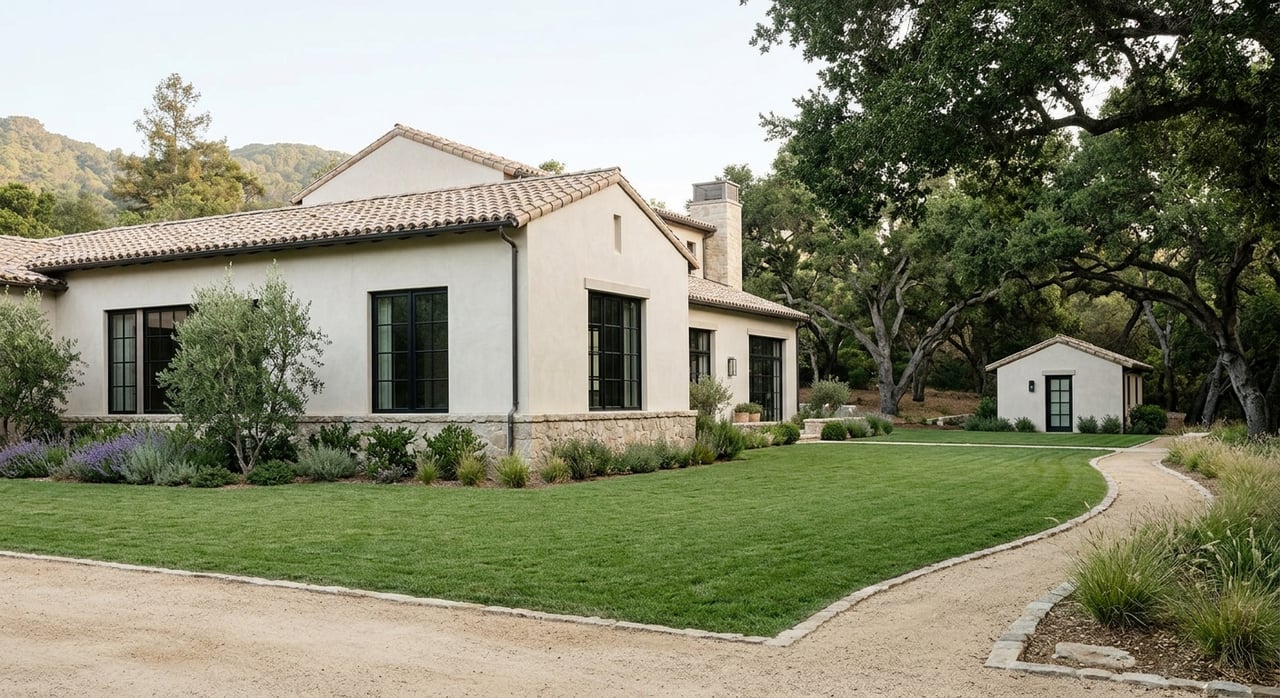
Portola Valley Zoning Rules for Acreage and Remodels
April 16, 2026
April 16, 2026
Thinking about buying acreage in Portola Valley or planning a major remodel? The opportunity can be exciting, but the zoning details matter more than many buyers expect. In Portola Valley, lot size alone does not tell you what you can build, expand, or add. If you understand the basic rules early, you can make better decisions and avoid costly surprises later. Let’s dive in.
The first step is confirming the parcel’s exact zoning district on Portola Valley’s official zoning map. Residential properties may fall within districts such as R-E, R-1, M-R, O-A, or another district, and that designation shapes what comes next.
Your zoning district affects core development standards such as setbacks, height, and the Town’s allowed floor area and impervious surface calculations. Portola Valley notes that allowed residential floor area depends on more than acreage. It may also depend on average slope, geologic or flood zone areas, and the zoning district itself.
That is why two parcels with similar acreage can have very different remodel or expansion potential. Before you rely on a listing description or rough lot size, it is wise to confirm the zoning and ask Town staff for parcel-specific guidance.
In Portola Valley, a larger lot does not automatically mean a larger house, easier addition, or more flexible site plan. The Town specifically notes that geologic conditions, flood zones, and steep slopes can reduce what is practical or permitted on a parcel.
For buyers, this is one of the most important takeaways. A property that looks generous on paper may still face meaningful constraints because of site conditions, grading limits, or review requirements.
The Town’s Planning FAQs recommend early contact with Planning staff so you can identify issues before plans are finalized. If you are evaluating a purchase with future remodel goals in mind, that early step can be especially valuable.
Portola Valley defines residential floor area as the total floor area measured from the exterior walls for all buildings on the parcel. That means the Town looks beyond the main house alone when calculating the total.
The Town also uses an 85% floor-area calculation that regulates the mass of the residence, including first and second floors and required off-street parking. For many remodels, this can become a practical design limit even when the parcel itself is substantial.
A basement that meets the Town’s zoning definition is not counted toward floor area. However, the Town says the basement ceiling height cannot exceed 12 feet directly under the first floor above.
Height can also limit what you can do, especially with second-story additions or major remodels. According to the Town’s Planning FAQs, building height is measured from the natural ground that existed before grading, or from the building pad if excavated below natural grade, whichever is lower.
In zoning districts of 1 acre or more, the Town states there is a 28-foot height limit, with a 34-foot maximum. In practice, that means a large lot may still have a tight design envelope if the proposed structure pushes height or massing too far.
Setbacks define how close a structure can sit to property lines and often shape where additions, guest structures, or ADUs can go. While setback standards depend on the project type and site specifics, they are a major factor in whether a concept actually fits.
For second units, Portola Valley’s ADU quick overview lists local setback standards of 20 feet front and 10 feet side and rear on parcels under 1 acre, and 50 feet front and 20 feet side and rear on parcels over 1 acre. The same handout also notes that State standards may allow 4-foot side and rear setbacks in some situations, with other requirements applying.
Portola Valley pays close attention to how a project fits the land. If your plans involve meaningful grading, vegetation removal, or tree impacts, you may need additional approvals beyond a standard remodel review.
The Town says a Site Development Permit is required for excavations or fills over 50 cubic yards, fill deeper than 3 feet, excavation deeper than 4 feet, disturbed areas over 5,000 square feet, vegetation removal over 5,000 square feet on certain parcels, or significant tree impacts. These thresholds matter for buyers considering a new driveway, expanded pad, pool, or major hillside work.
The Town Geologist also plays an important role. Portola Valley says the geologist reviews all site development permits and also reviews new residential construction, additions over 500 square feet, pools, flood-zone sites, and other geologically sensitive situations.
The Town further notes that some parcels may be constrained by fire-safety issues such as street access, slope, and road width, along with mapped geologic setbacks. On acreage properties, these site conditions can be just as important as square footage.
If you are buying with renovation plans in mind, try to answer a few core questions before you get too far:
These questions can help you compare properties more realistically. They also help you separate a home with true long-term flexibility from one with a narrower path for expansion.
For many Portola Valley buyers, second-unit flexibility is part of the appeal. That may mean guest accommodations, multigenerational living, or a more functional property layout over time.
The Town defines an ADU as a separate living unit with its own kitchen, bath, sleeping, and living facilities. A JADU is a conversion of existing interior space up to 500 square feet, with a separate entrance and an efficiency kitchen, and either the JADU or main house must be owner occupied, according to the Town’s ADU and JADU information.
Portola Valley’s current quick overview lists these size limits:
The same Town handout also lists parcel-size-based unit counts. On parcels under 3.5 acres, one external or internal ADU plus one JADU is listed as two units total. On parcels over 3.5 acres, one detached ADU, one internal ADU, and one JADU are listed as three units total.
Parking rules vary too. The Town says external ADUs need one off-street parking space, which can be uncovered or tandem, while internal ADUs and JADUs do not require a dedicated parking space.
State law is also part of the picture. The California Department of Housing and Community Development explains that ADU and JADU applications are considered ministerially, without discretionary review or a hearing, and must be evaluated against predictable, objective standards. You can review that framework on the HCD ADU page.
In practical terms, the key question is usually not whether a parcel can support any second unit in theory. It is whether the proposal fits the applicable objective standards and the site’s real-world constraints.
Portola Valley offers early opportunities to test a concept before full submittal. The Town’s Planning and Building virtual appointments allow you to meet with staff to review conceptual site plans and floor plans, determine whether a planning permit is needed, and identify likely issues early.
For larger projects, a pre-application meeting is required for work that needs ASCC review, including new houses, significant additions, new ADUs, and major driveway, landscaping, or topography changes. This step can help you understand the likely review path before investing heavily in final plans.
The Architectural and Site Control Commission, or ASCC, is Portola Valley’s design review board. According to the Town, the ASCC is guided by design guidelines and zoning and site development ordinances, with a focus on visual character, public safety, and discouraging excessive grading and unnecessary tree removal.
The Planning FAQs state that ASCC review is triggered for buildings or additions of 400 square feet or larger, for projects that are two stories or more, and for certain other project types such as grading between 100 and 1,000 cubic yards or cuts and fills over five feet. If your remodel is more than a light interior update, this threshold is worth watching closely.
The Town says complete ASCC applications can often reach an agenda about two weeks after submittal. It also notes that ASCC approvals become effective 16 days after approval because of a 15-day appeal period, and building permits can be pursued after that period.
If your project goes through ASCC review, Portola Valley also requires green-building documentation. The Town’s Green Building and Your Project page says projects subject to ASCC review must complete the Build It Green checklist and meet a minimum point threshold.
Even smaller addition or remodel projects that do not require ASCC review must still include the checklist with the building permit application. It is a good reminder that the review process is not only about massing and setbacks. Documentation requirements matter too.
If you are considering acreage in Portola Valley, it helps to think in terms of development envelope, not just lot size. Zoning district, slope, floor-area rules, height, grading limits, tree impacts, fire-access conditions, and review triggers all shape what is realistically possible.
That does not mean a property is less desirable. It simply means the right purchase decision often comes from matching the parcel to your goals early, whether you want a careful remodel, a future expansion, or added ADU flexibility.
If you want guidance on evaluating Portola Valley properties with remodel or acreage potential in mind, Michael Warren offers discreet, local insight to help you assess fit, ask the right questions, and move forward with more confidence.
Stay up to date on the latest real estate trends.
Whether it a first-time home buyer or a 10+ Million listing, Michael brings an innovative approach and earns the respect of his clients by working tirelessly on their behalf and always offering candid advice. Contact him today to discuss all your real estate needs!
Connect with Michael.
[email protected]
(650) 315-0224
License #01968537
2930 Woodside Road, Woodside, CA 94062