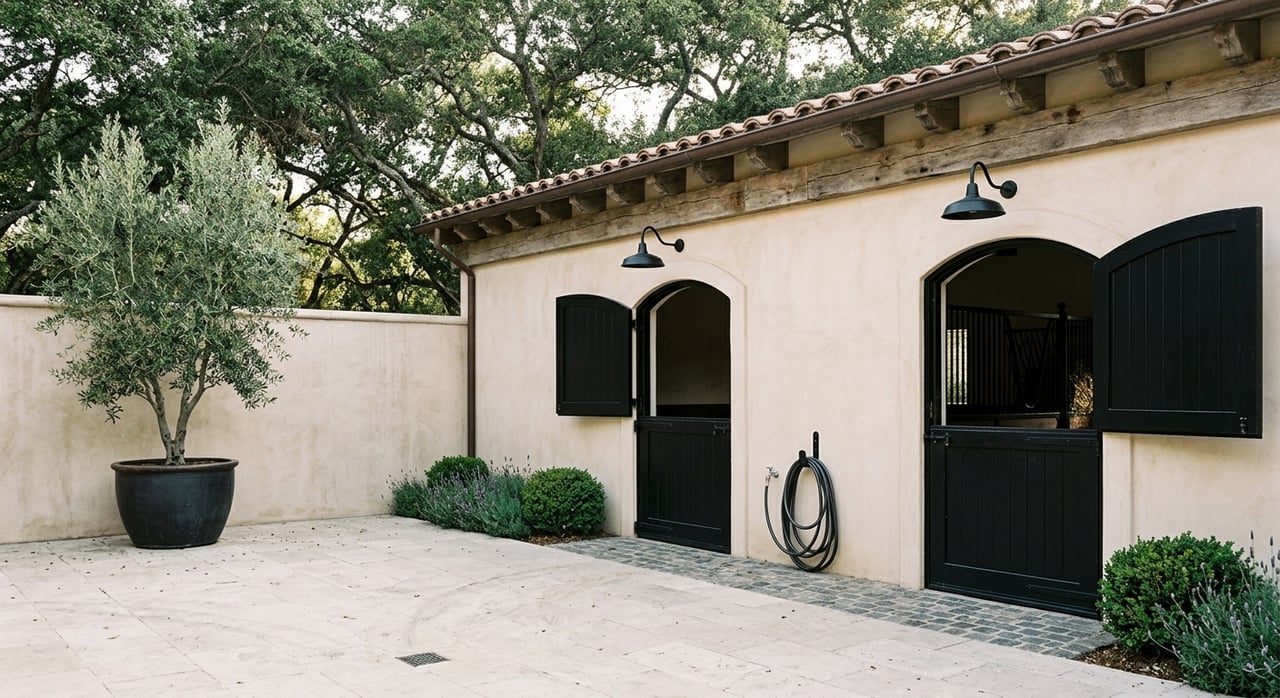
What Buyers Should Know About Woodside CA Equestrian Homes
April 23, 2026
April 23, 2026
If you are drawn to Woodside for its open space, privacy, and rural character, the town’s horse culture is likely part of the appeal. But buying an equestrian property here takes more than spotting a barn or seeing a trail nearby. You need to know how the town supports horsekeeping, how access actually works, and what rules can affect your plans. Let’s dive in.
Woodside’s equestrian identity is not just aesthetic. It is built into local policy, land-use review, and trail planning. The town maintains both a Trails Committee and a Livestock and Equine Heritage Committee, and it also publishes a horsekeeping reference notebook for residents.
That matters when you are evaluating property value and long-term use. In many communities, horse facilities are rare exceptions. In Woodside, they are part of the town’s ongoing framework for how land is used and preserved.
The town’s 2023 General Plan report card shows that equestrian life remains active today. It highlights annual Day of the Horse programming, roadway horse-safety signs, mapped public equestrian trails, and permissive trail access used by Woodside Trails Club members under property-owner agreements. The same report notes that the Center Trail has served equestrians for more than 100 years and reopened with a new bridge in 2020.
For buyers, this means Woodside’s horse culture is real, but it is also structured. The Planning Department has processed about 22 barn applications since 2009, according to the General Plan report card, which is a useful sign that equestrian improvements remain a meaningful part of the local market.
One of Woodside’s biggest draws is the ability to connect daily life with riding access. But trail access is not one-size-fits-all. Depending on the property, access may come from public roadside trails, dedicated off-road easements, or permissive private trail agreements.
Woodside’s planning policies support trail connections between neighborhoods and larger open-space destinations. The town also treats dedicated equestrian easements as part of the property area rather than a reduction of developable land, which can be an important factor when you compare parcels.
Nearby public riding destinations add to the area’s appeal. If you want a broader riding network beyond a private estate, Woodside offers access to several well-known preserves and parks.
A trail nearby does not always mean guaranteed, permanent access. Some routes depend on permissive agreements, and public agencies may also close trails temporarily for maintenance or trail damage. Midpen specifically notes that trail access can change over time.
That is why due diligence matters. If riding access is central to your purchase decision, you will want to confirm whether the property benefits from a formal easement, a public connection, a club arrangement, or simply proximity to a preserve. Those are very different forms of access, and they can affect how useful a property is for your intended lifestyle.
Not every Woodside buyer wants horses on-site right away. Some prefer to board while they learn the area, improve a property, or decide whether a private facility makes sense. In that case, the local boarding structure is worth understanding.
The best-known facility is The Horse Park at Woodside. The park describes itself as a 270-plus-acre facility with a 52-stall main barn, four subsidiary barns, stall-paddocks, turnouts, open pasture, a perimeter trail, and trail connections to the Woodside Trail Club network.
There is an important limitation, though. The Horse Park states that boarders must affiliate with a resident trainer and purchase a Full-Use Membership, and it does not allow independent boarders. It is also not generally open to the public outside shows and events, and non-boarders need memberships and reservations for use.
For a buyer, that structure says a lot about the local market. Woodside’s equestrian environment is not built around casual drop-in horse services. It is shaped by memberships, private property, permit-backed facilities, and carefully managed use.
On larger Woodside parcels, equestrian improvements can be a major part of a property’s function and value. Barns, arenas, turnouts, corrals, and fencing are not side features. They can shape circulation, usability, privacy, and how the land performs over time.
The town’s policies support equestrian easements and trail planning, which helps explain why horse facilities remain relevant on estate properties. For the right buyer, a well-planned equestrian layout can be just as important as the home itself.
That said, appearance is not enough. A picturesque barn or riding ring does not automatically mean the improvements are legal, conforming, or suitable for your goals. Before you buy, it is wise to evaluate the property as both a residence and a regulated equestrian site.
Woodside’s rural-residential zoning is highly parcel specific. In the RR zone, the town’s development standards include a 3-acre minimum lot area, 50-foot basic setbacks, a 2,500-square-foot maximum for barns and stables, a 24-foot height limit for barns and stables, and a 30-foot height limit for covered equestrian arenas. Parcels with a net average slope of 12.5% or more also have natural-state requirements under the RR zoning standards.
For private horsekeeping, the town’s Private Stable Permit application adds another layer of review. The property must be at least one acre, the maximum is two horses per acre, each horse needs a shelter of at least 10 by 10 feet, turnouts must be at least 600 square feet, and equestrian areas must be on slopes under 20%. The permit also requires the owner to live on-site and address waste management, drainage, parking, fencing, fire protection, and related site details.
Commercial horse use follows a different path. The town’s Professional Stable Permit application applies to boarding stables, riding schools, and similar operations and requires a conditional use permit, a site plan, an operating description, references, and inspection approval.
Before you move forward on an equestrian property, verify:
In Woodside, wildfire readiness is part of responsible property ownership, especially on acreage. This is not separate from equestrian planning. It directly affects how a property functions for people, animals, and structures.
The Woodside Fire Protection District’s 2024 Fuel Mitigation Ordinance requires defensible space and uses three-year assessment rotations, with property owners given at least two years to comply. The town also references defensible-space and home-hardening support, along with emergency preparedness resources that include horse evacuation planning.
If you are considering a horse property, look at wildfire planning early. Access roads, trailer loading areas, pasture layout, vegetation management, and water availability can all shape how workable the property is in an emergency.
Woodside’s equestrian lifestyle is genuine, long-standing, and closely tied to the town’s identity. It offers real advantages for buyers who want land, trail access, and horse facilities in a community that actively supports those uses.
At the same time, it is a rule-bound market. The key question is not just whether a property looks horse-friendly, but whether its zoning, permits, trail access, and physical site conditions truly support how you want to use it.
If you are considering a Woodside purchase and want clear, discreet guidance on acreage, estate properties, or equestrian considerations, Michael Warren can help you evaluate the details that matter before you commit.
Stay up to date on the latest real estate trends.
Whether it a first-time home buyer or a 10+ Million listing, Michael brings an innovative approach and earns the respect of his clients by working tirelessly on their behalf and always offering candid advice. Contact him today to discuss all your real estate needs!
Connect with Michael.
[email protected]
(650) 315-0224
License #01968537
2930 Woodside Road, Woodside, CA 94062